
Have you ever heard someone talk about an investor and an investee and wondered what the real difference is? You are not alone. These two financial terms are closely connected, yet many people still confuse them because they are often used together in business, startup, and investment discussions.
Understanding the difference between investor vs investee is important for entrepreneurs, students, startup founders, and anyone interested in finance. Whether you want to start a business, raise funding, or simply improve your financial knowledge, knowing how these two roles work can help you better understand the modern business world.
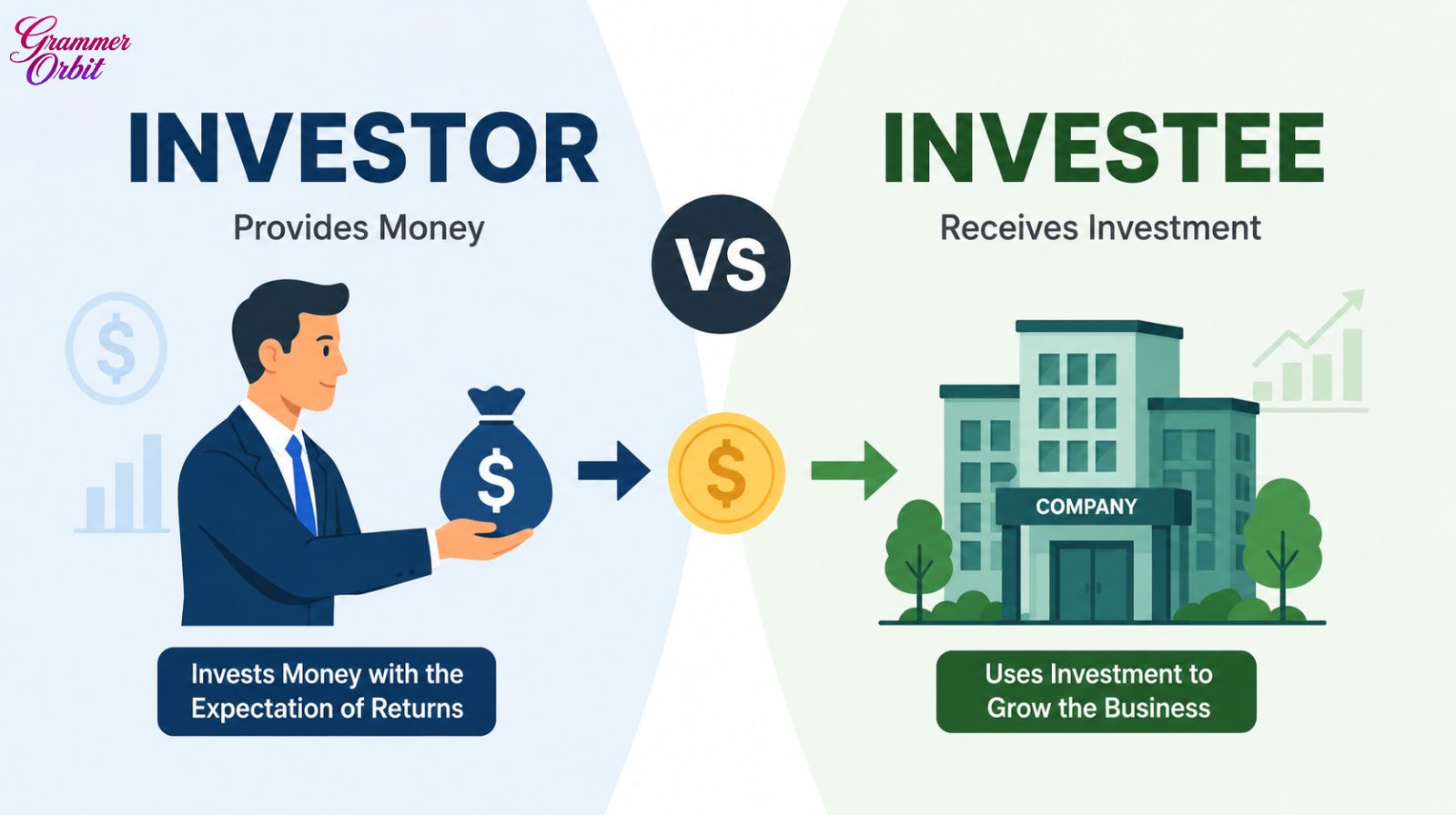
In simple terms, an investor provides money with the expectation of future returns, while an investee receives that investment to grow a business or project. Although the relationship sounds straightforward, many people misunderstand how these roles actually work in real-life financial situations.
In this guide, you will learn what investors and investees are, how they are connected, real-world examples, common mistakes people make, and why this relationship plays such an important role in today’s economy.
What Does Investor Mean?
An investor is a person, company, or organization that puts money into a business, project, or asset with the expectation of earning profit or growth in the future.
Investors provide financial support in exchange for benefits such as ownership shares, interest, or returns on investment.
Types of Investors
There are several kinds of investors in the business world.
Individual Investors
These are regular people who invest their personal money into stocks, startups, or businesses.
For example:
- Buying company shares
- Investing in real estate
- Funding a small startup
Angel Investors
Angel investors are wealthy individuals who provide early funding to startups.
They often help small businesses grow before they become profitable.
Venture Capital Firms
These firms invest large amounts of money into high-growth startups.
Companies like Airbnb and Uber received venture capital funding during their early stages.
Institutional Investors
Banks, insurance companies, pension funds, and large organizations also invest money into businesses and markets.
See also: Bellies vs Bellys: Grammar and Correct Usage Explained
What Does Investee Mean?
An investee is the company, business, or entity that receives the investment.
In simple words:
- The investor gives money
- The investee receives money
The investee uses this funding to grow operations, hire employees, develop products, or expand into new markets.
Common Examples of Investees
An investee can be:
- A startup company
- A growing business
- A technology firm
- A real estate project
- A manufacturing company
For example, if a startup receives funding from an angel investor, the startup becomes the investee.
Why Businesses Become Investees
Many businesses seek investment because growth often requires capital.
They may need money for:
- Product development
- Marketing campaigns
- Office expansion
- Research and innovation
- Hiring skilled employees
Without investors, many successful companies would struggle to grow.
Investor vs Investee: The Main Difference
The easiest way to understand investor vs investee is to remember their roles in the financial relationship.
| Feature | Investor | Investee |
|---|---|---|
| Role | Provides money | Receives money |
| Goal | Earn profit or returns | Grow business |
| Risk Level | Risks losing investment | Risks business failure |
| Ownership | May receive shares | May give equity |
| Example | Venture capitalist | Startup company |
Simple Real-Life Example
Imagine a tech startup needs $100,000 to launch a mobile app.
- A businessperson provides the money
- The startup receives the funding
Here:
- The businessperson is the investor
- The startup is the investee
Both parties benefit if the business succeeds.
How Investors and Investees Work Together
The relationship between investors and investees is one of the most important parts of the modern economy.
Investors help businesses grow, while investees create opportunities for financial returns.
Investors Provide More Than Money
Many investors also offer:
- Business advice
- Industry connections
- Marketing guidance
- Strategic planning
- Mentorship
This is especially common in startup investing.
See also: Anual or Annual: Which One Is Correct? Complete Guide
Investees Offer Growth Opportunities
Businesses with strong ideas can provide significant profits to investors over time.
For example, early investors in companies like:
- Amazon
- Tesla
earned massive returns as those businesses expanded.
Trust Is Essential
A successful investor-investee relationship depends heavily on:
- Transparency
- Financial reporting
- Clear agreements
- Shared goals
- Communication
Without trust, partnerships often fail.
Real-Life Case Study: Airbnb’s Early Investors
One of the best examples of an investor-investee relationship is Airbnb.
In its early days, Airbnb struggled to secure funding. Many people doubted the idea of strangers renting rooms to travelers online. However, startup accelerator Y Combinator invested approximately $20,000 into Airbnb during its early growth stage.
At that time:
- Y Combinator acted as the investor
- Airbnb was the investee
The investment helped Airbnb improve its platform, attract users, and scale operations.
Over time, Airbnb became one of the largest hospitality platforms in the world. Early investors earned enormous returns on their investments because the company’s value increased dramatically.
This example shows how investors can help innovative businesses grow while also benefiting financially. It also demonstrates that investees are not simply “receivers of money.” They are businesses with ideas, goals, and growth potential that investors believe in.
Today, startup ecosystems around the world rely heavily on these investor-investee partnerships.
Why Understanding Investor vs Investee Matters
Understanding these financial terms is useful in many situations.
For Entrepreneurs
Startup founders need to understand how investment relationships work before seeking funding.
For Students
Finance and business students regularly encounter these terms in textbooks and academic discussions.
For Job Seekers
People working in banking, finance, startups, or consulting often hear these words in meetings and reports.
For Everyday Readers
Financial literacy is becoming increasingly important in modern life.
Knowing the difference between investor and investee helps people better understand:
- Business news
- Startup funding announcements
- Stock market discussions
- Economic trends
Investment Trends and Statistics in 2025–2026
Investment activity continues to grow globally, especially in technology and artificial intelligence sectors.
According to recent reports from organizations like Statista and Crunchbase:
- Global startup funding exceeded hundreds of billions of dollars in recent years
- Artificial intelligence startups remain among the top investee categories
- Venture capital investments continue increasing in fintech and healthcare industries
- Small business investments are growing across developing economies
These trends show how important investor-investee relationships have become in the global economy.
See also: Unphased or Unfazed Explained: Avoid Common Mistakes
Key 2025 Investment Trends
AI Startup Investments
Artificial intelligence companies are attracting record-breaking funding worldwide.
Sustainable Investing
Many investors now prioritize environmentally responsible businesses.
Global Startup Expansion
New startups are receiving international funding faster than ever before.
Because of these trends, understanding financial terminology has become more valuable for professionals and entrepreneurs alike.
Common Mistakes People Make With Investor and Investee
Many learners misunderstand these words because they sound related.
Here are some common mistakes.
Confusing the Roles
Some people think both terms mean the same thing.
However:
- Investor = gives money
- Investee = receives money
Assuming Only Big Companies Need Investors
Even small businesses and local startups can have investors.
Thinking Investors Always Control Businesses
Not all investors take control of companies.
Some simply provide funding and remain passive partners.
Ignoring Legal Agreements
Investor-investee relationships usually involve contracts, ownership terms, and legal protections.
These agreements are important for avoiding disputes.
See also: Party’s or Parties: Which One Is Correct?
How to Easily Remember Investor vs Investee

A simple memory trick can help.
Investor = Invests
The investor is the one actively investing money.
Investee = Gets Invested In
The investee is the business receiving the investment.
This small distinction makes the meaning much easier to remember.
Investor vs Investee in Modern Startups
Startups depend heavily on investment ecosystems today.
Why Startups Need Investors
Most startups need outside funding because building a company requires significant resources.
What Investors Look For
Investors usually evaluate:
- Market demand
- Team quality
- Business model
- Growth potential
- Competition
What Makes a Strong Investee
A good investee often has:
- A clear vision
- Scalable ideas
- Strong leadership
- Financial planning
- Innovation potential
This relationship creates opportunities for both sides.
FAQs
Q1: Is an investee the same as a borrower?
A: No. A borrower usually takes a loan that must be repaid with interest. An investee often gives equity or ownership shares in exchange for investment.
Q2: Can a company be both an investor and an investee?
A: Yes. Large companies sometimes invest in startups while also receiving investments from other organizations.
Q3: What is the opposite of investor?
A: In many financial discussions, the related counterpart is the investee because it receives the investment.
Q4: Do investors always make profits?
A: No. Investments carry risks, and investors can lose money if businesses fail.
Q5: Why do startups need investors?
A: Startups often need funding to develop products, hire employees, market services, and grow operations.
Q6: What industries attract the most investors in 2025?
A: Artificial intelligence, fintech, healthcare, and green energy are among the fastest-growing investment sectors.
Q7: Is investee a real business term?
A: Yes. Investee is widely used in accounting, finance, and investment reporting.
Conclusion
Understanding investor vs investee is essential for anyone interested in business, startups, or finance. Although these terms are closely connected, they play completely different roles.
An investor provides money with the hope of earning future returns, while the investee receives funding to grow and expand. Together, they create partnerships that drive innovation, business growth, and economic development.
As startup culture and global investing continue to grow in 2025 and beyond, knowing these financial concepts can help you better understand the modern business world.
Whether you are an entrepreneur searching for funding or simply improving your financial knowledge, understanding the connection between investors and investees is a valuable step forward.
External References
👉 Discover more simple and practical grammar guides on Grammer Orbit

Zia Ahmad is a professional blogger specializing in grammar tips and spelling accuracy. He creates clear, practical content that helps readers eliminate errors, strengthen writing skills, and communicate effectively for students, professionals, and everyday writers worldwide.