
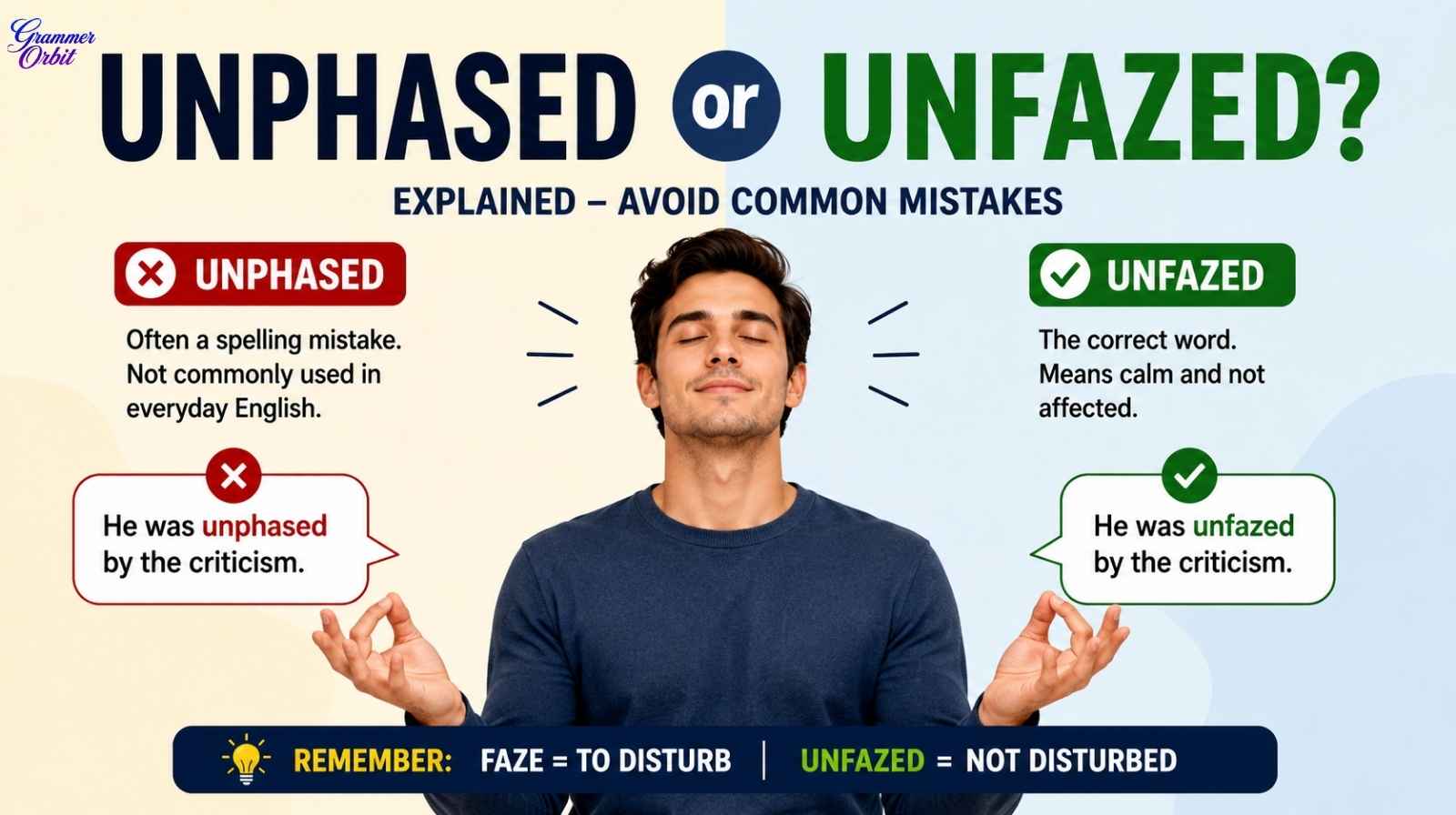
Have you ever typed “unphased” and suddenly paused, wondering if it’s actually correct? You’re not alone. Many English writers get confused between unphased vs unfazed because the words sound similar and are often used in stressful or emotional situations.
The confusion is understandable, but only one of these spellings is considered correct in standard English. Using the wrong word can make your writing look less clear and less professional, especially in emails, articles, social media posts, or workplace communication.
In this guide, you’ll learn the correct meaning of unfazed, why unphased is usually a mistake, common examples people get wrong, and simple tricks to remember the correct spelling every time.
What Does “Unfazed” Mean?
The word unfazed means not disturbed, not worried, or not affected by something surprising or difficult.
It describes someone who stays calm under pressure.
Simple Definition of Unfazed
If a person is unfazed, they remain relaxed even when others panic.
Examples of “Unfazed” in Sentences
- She remained unfazed during the difficult interview.
- Despite the criticism, he looked completely unfazed.
- The experienced pilot stayed unfazed during turbulence.
Why “Unfazed” Is the Correct Word
The word comes from the verb faze, which means:
To disturb or embarrass someone.
Therefore:
- fazed = disturbed
- unfazed = not disturbed
This is why dictionaries and grammar experts recognize unfazed as the proper spelling.
Is “Unphased” a Real Word?
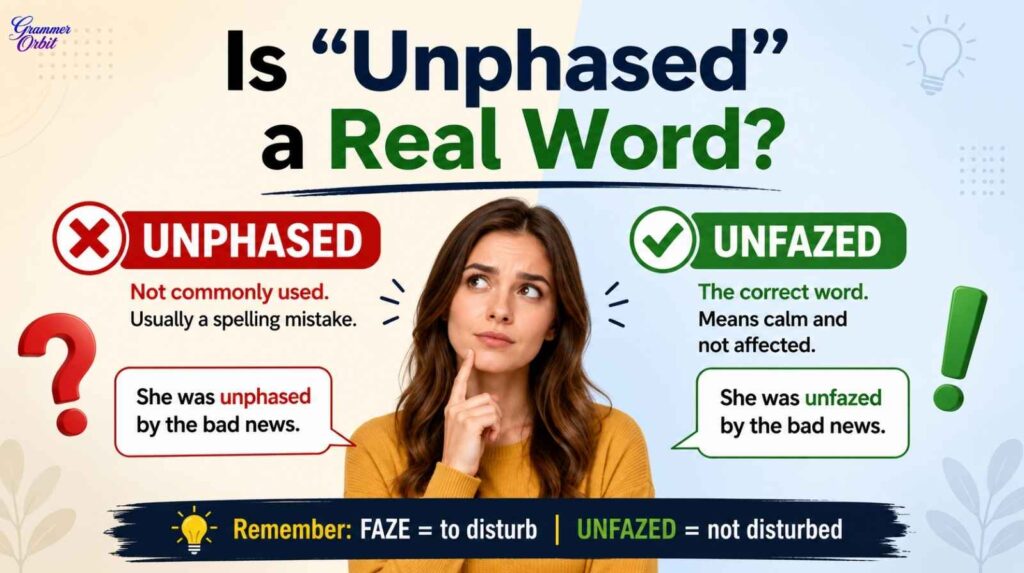
Technically, unphased can exist in extremely limited contexts, but most of the time it is considered a spelling mistake.
People usually write unphased when they actually mean unfazed.
Why People Write “Unphased”
The confusion happens because:
- “ph” and “f” produce similar sounds
- English spelling can be tricky
- Many people incorrectly assume the root word is “phase”
What “Unphased” Literally Means
If interpreted literally:
- phase relates to stages or periods
- unphased could mean “not phased” or “not put into a phase”
However, this usage is extremely rare in everyday English.
Example of Rare Technical Usage
In science or engineering, “unphased” may occasionally describe something not synchronized in phase alignment. However, this is not the meaning most writers intend.
For normal writing, conversations, emails, blogs, and social media posts:
✅ Use unfazed
❌ Avoid unphased
Unphased vs Unfazed: The Key Difference
Many writers mix up these words because they sound nearly identical. However, their meanings and correctness are very different.
Quick Comparison Table
| Word | Correct Usage | Meaning | Common Context |
|---|---|---|---|
| Unfazed | ✅ Yes | Calm or unaffected | Everyday English |
| Unphased | ❌ Usually incorrect | Rare technical meaning | Scientific contexts |
Easy Way to Remember
Think about the word:
- Faze = disturb
- Unfazed = not disturbed
That simple connection can help you avoid the mistake permanently.
Example Comparison
Incorrect:
She was unphased by the bad news.
Correct:
She was unfazed by the bad news.
Why This Grammar Mistake Is So Common
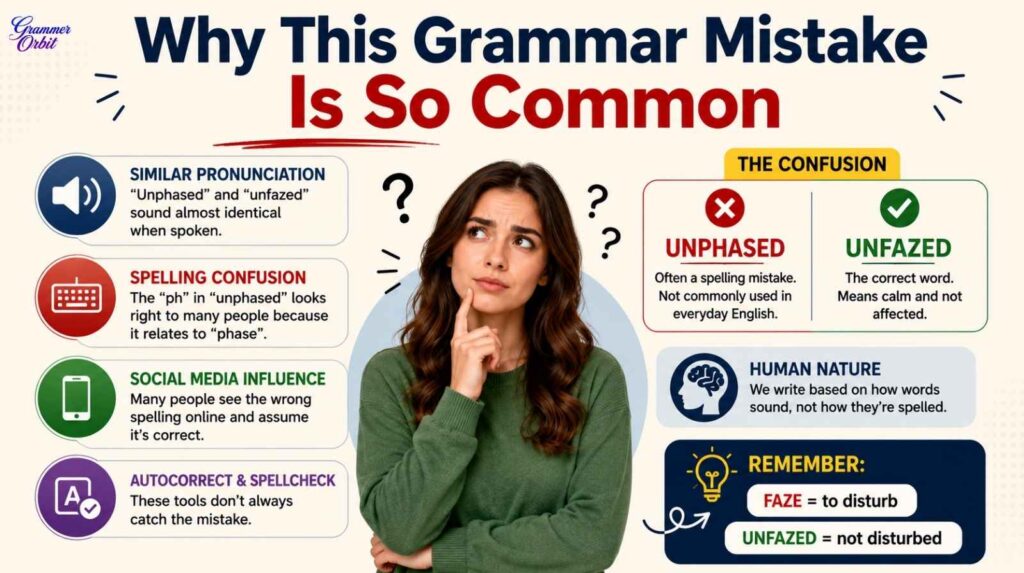
The confusion between unphased and unfazed has increased significantly because of internet writing, social media, and autocorrect behavior.
Similar Pronunciation Causes Confusion
Both words sound almost identical when spoken quickly. As a result, many people spell the word based on sound instead of meaning.
Social Media Has Increased the Error
Platforms like TikTok, X, Instagram, and Reddit often contain spelling mistakes that spread quickly. Once people repeatedly see “unphased,” they begin assuming it is correct.
Autocorrect Does Not Always Help
Some writing tools fail to flag “unphased” because it can technically exist in niche contexts.
Therefore, writers must understand the actual meaning instead of relying completely on spellcheck.
Real-Life Writing Example: How One Small Error Changed Professional Perception
A marketing manager preparing a presentation for an international client wanted to describe her team leader as calm during a crisis. In the presentation slides, she wrote:
“Our director remained unphased throughout the negotiations.”
Although the meeting still went well, one client later pointed out the spelling mistake privately. The issue was minor, but it affected the professional tone of the presentation.
Afterward, the company updated its internal writing guide to include commonly confused words like:
- unphased vs unfazed
- loose vs lose
- affect vs effect
Interestingly, the manager admitted she had seen “unphased” online many times and assumed it was acceptable English.
This example shows how a tiny spelling mistake can influence credibility, especially in business communication, blogging, journalism, and academic writing.
Today, grammar accuracy matters more than ever because online content spreads instantly. Readers often judge expertise based on clear and correct writing.
Data and Language Trends (2025–2026)
Recent language trend reports show that spelling confusion continues to rise in digital communication.
According to language usage insights published by major grammar platforms and search trend analysis:
- Searches for “unphased or unfazed” increased significantly during 2025.
- Grammar-related search queries continue growing because more people create online content.
- Misspelled emotional-expression words rank among the most common writing mistakes online.
Educational platforms also report that commonly confused words generate millions of monthly searches globally.
This trend highlights an important reality:
People care about writing correctly, especially in professional and public communication.
What Experts Recommend
Professional editors recommend:
- Learning word origins
- Reading carefully before publishing
- Using trusted dictionaries
- Avoiding spelling assumptions based only on pronunciation
Helpful references include:
How to Remember the Correct Spelling
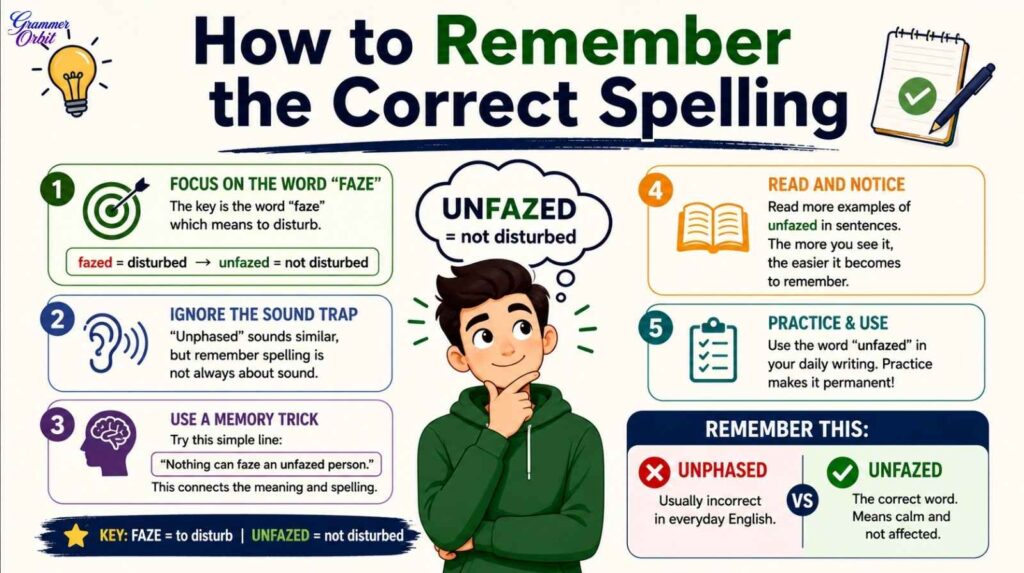
Remembering unfazed becomes much easier when you connect it to the root word.
H3: Focus on the Word “Faze”
The key word is:
faze = disturb
So:
unfazed = not disturbed
H3: Ignore the Sound Trap
Do not rely only on pronunciation.
English contains many words that sound similar but have different spellings.
For example:
- phase
- faze
H3: Use a Memory Trick
Try this simple trick:
“Nothing can faze an unfazed person.”
This creates a strong mental connection between the words.
Common Mistakes to Avoid
Many writers accidentally misuse “unphased” in casual and professional writing.
Here are the most common mistakes.
Mistake #1: Using “Unphased” in Formal Writing
Incorrect:
The CEO remained unphased during the crisis.
Correct:
The CEO remained unfazed during the crisis.
Mistake #2: Assuming Spellcheck Is Always Right
Spellcheck tools may not always detect context-based errors.
Always verify meaning manually.
Mistake #3: Confusing “Phase” With “Faze”
Remember:
- phase = stage
- faze = disturb
These are completely different words.
Step-by-Step Guide to Using “Unfazed” Correctly
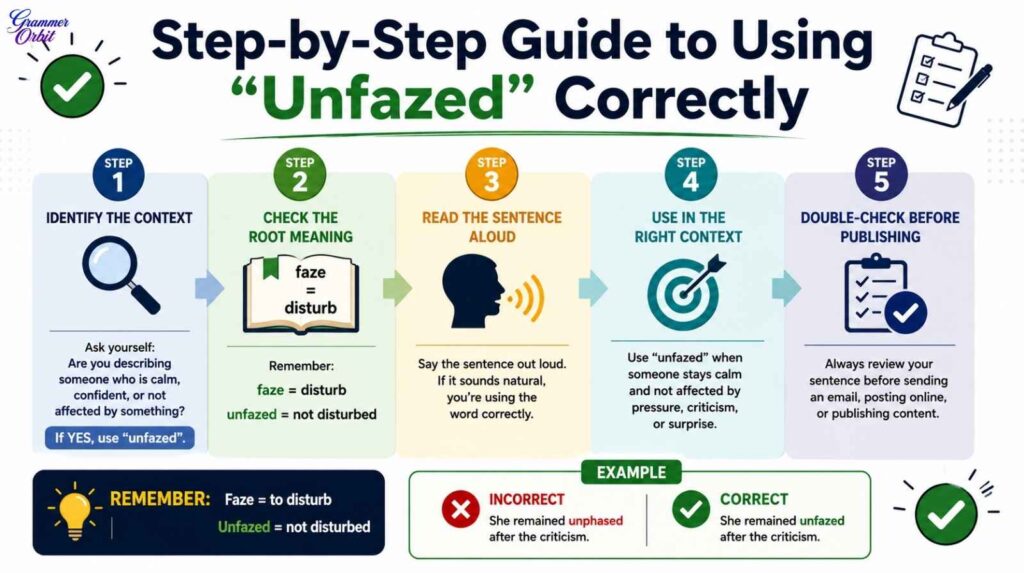
Step 1: Identify the Context
Are you describing someone calm under pressure?
If yes, use unfazed.
Step 2: Check the Root Meaning
Ask yourself:
Does this relate to being disturbed?
If yes, “faze” is the correct root.
Step 3: Read the Sentence Aloud
Example:
She remained unfazed after the criticism.
This sounds natural and grammatically correct.
Step 4: Double-Check Before Publishing
Especially important for:
- blog posts
- resumes
- emails
- business reports
- social media captions
FAQs
Q.Is “unphased” ever correct?
A: Yes, but only in extremely rare technical or scientific contexts. In normal English writing, “unfazed” is almost always the correct choice.
Q.What does “unfazed” mean?
A: It means calm, unaffected, or not disturbed by something stressful or surprising.
Q.Why do people confuse unphased and unfazed?
A: Because the words sound similar when spoken aloud.
Q.Is “unfazed” formal English?
A: Yes. It is widely accepted in professional, academic, and casual writing.
Q.Can I use “unfazed” in business communication?
A: Absolutely. It is appropriate in emails, presentations, reports, and workplace discussions.
Q.Which dictionaries recognize “unfazed”?
A: Major dictionaries including Merriam-Webster and Cambridge recognize “unfazed” as the standard word.
Conclusion
The confusion between unphased or unfazed is extremely common, but the correct choice for everyday English is almost always unfazed.
If someone remains calm, confident, or unaffected during a difficult situation, the proper word is:
unfazed
Meanwhile, “unphased” is usually a spelling mistake caused by pronunciation confusion.
By understanding the root meaning of faze, practicing correct usage, and reviewing your writing carefully, you can avoid this grammar error with confidence.
Whether you are writing blog posts, emails, academic papers, or social media captions, using the correct spelling instantly improves clarity and professionalism.
If you found this guide helpful, bookmark it and share it with other writers who often confuse unphased vs unfazed.
👉 Discover more simple and practical grammar guides on Grammer Orbit

Zia Ahmad is a professional blogger specializing in grammar tips and spelling accuracy. He creates clear, practical content that helps readers eliminate errors, strengthen writing skills, and communicate effectively for students, professionals, and everyday writers worldwide.