
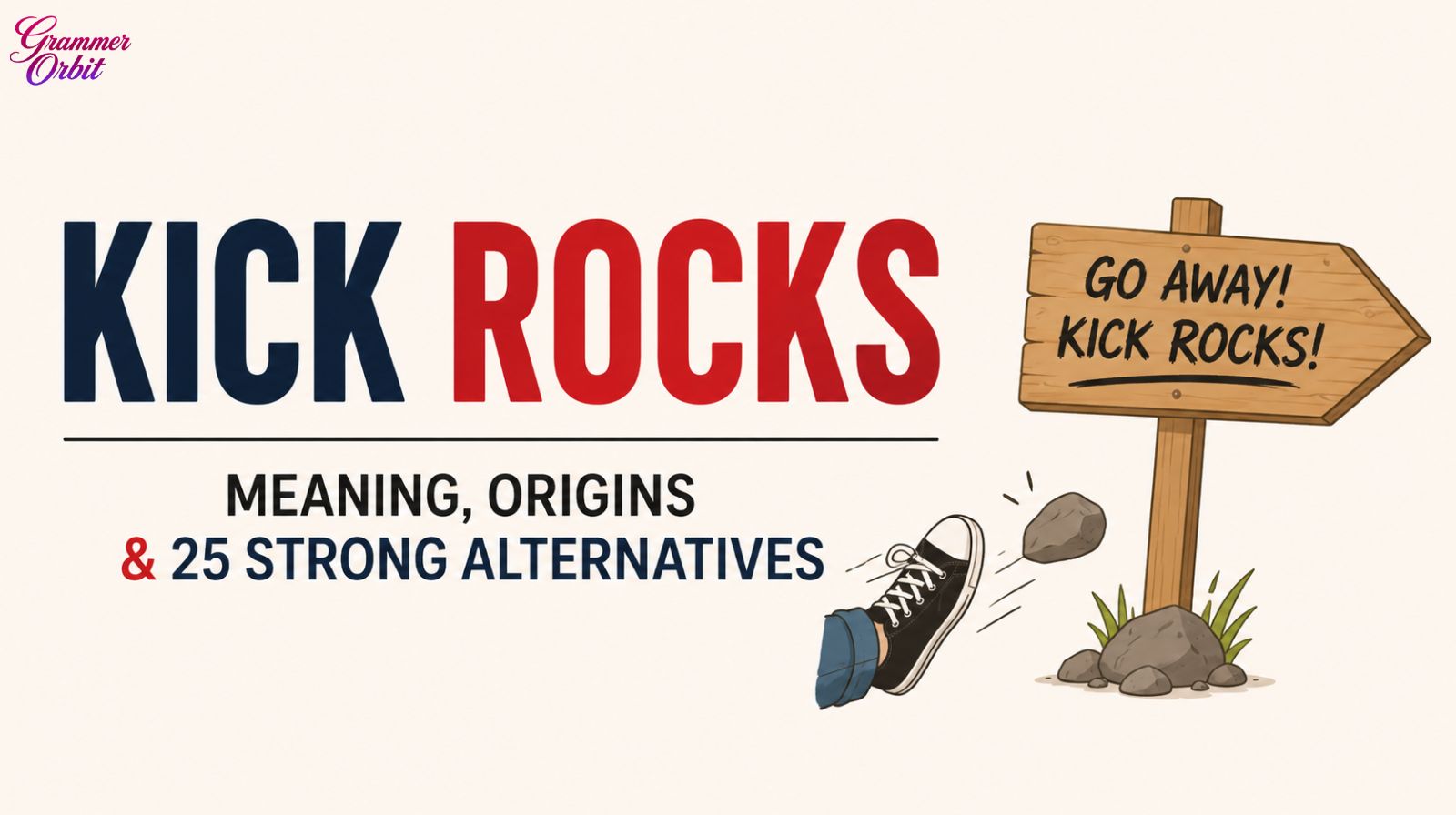
Have you ever heard someone say “kick rocks” and instantly wondered whether it was an insult, a joke, or just slang? You are not alone. This phrase appears everywhere today from social media arguments to movies, memes, sports interviews, and even casual conversations.
However, many people still do not fully understand the actual kick rocks meaning, where the phrase came from, or when it should be used.
In this guide, you will learn the exact meaning of “kick rocks,” its origins, real-life examples, modern usage, and 25 powerful alternatives you can use instead. By the end, you will confidently understand how this phrase works in modern English.
What Does “Kick Rocks” Mean?
The phrase “kick rocks” is an informal slang expression that tells someone to leave, go away, or stop bothering you. In many situations, it is considered dismissive or slightly rude.
Simple Definition of Kick Rocks
When someone says:
“Go kick rocks.”
They usually mean:
- “Leave me alone.”
- “Get out of here.”
- “I do not care what you think.”
- “Go away and waste your time somewhere else.”
The phrase often carries frustration, annoyance, or disrespect depending on the tone.
Why People Use This Phrase
People use “kick rocks” because it sounds more casual and creative than directly saying “go away.” It adds humor, sarcasm, or attitude to conversations.
For example:
- “If you think I’m working for free, you can kick rocks.”
- “The fans told the referee to kick rocks after the bad call.”
Is “Kick Rocks” Offensive?
Usually, it is mildly offensive rather than extremely harsh. However, context matters.
Among friends, it can sound playful:
- “You ate my fries again? Kick rocks!”
In arguments, though, it may sound rude or disrespectful.
Origins of the Phrase “Kick Rocks”
The exact origin of the phrase is unclear, but language experts believe it developed from older American slang expressions used to dismiss someone.
Early Street Slang Influence
Historically, telling someone to “kick rocks” implied they had nothing useful to do except walk away aimlessly kicking stones on the road.
The phrase became more popular in urban slang during the late 20th century, especially in sports culture, hip-hop communities, and street conversations.
How Social Media Increased Its Popularity
Platforms like TikTok, X, Instagram, and YouTube helped spread the phrase globally. Today, memes and reaction videos regularly include expressions like:
- “Tell them to kick rocks.”
- “He can go kick rocks.”
- “The haters can kick rocks.”
According to language trend reports from sources like Merriam-Webster and Dictionary.com, slang phrases tied to internet culture continue growing rapidly between 2024 and 2026.
Connection to Other Dismissive Phrases
“Kick rocks” belongs to a family of English expressions used to reject or dismiss someone, including:
- “Take a hike”
- “Beat it”
- “Get lost”
- “Buzz off”
However, “kick rocks” sounds more modern and internet-friendly.
How to Use “Kick Rocks” Correctly
Understanding the context is extremely important because this phrase does not fit every situation.
Casual Situations
Friends sometimes use it jokingly.
Example
“You still owe me pizza? Man, kick rocks.”
Here, the tone is playful rather than serious.
Arguments or Frustration
People also use it during disagreements.
Example
“If you think I’m apologizing for that, kick rocks.”
In this case, the phrase shows irritation or refusal.
Online Conversations
Social media users frequently use “kick rocks” in comment sections and debates.
Example
“The trolls can kick rocks.”
This usage is common on TikTok, Reddit, and sports forums.
Kick Rocks Meaning in Pop Culture and Social Media
The phrase exploded in popularity because internet culture favors short, expressive slang.
Why Gen Z Uses It Frequently
Younger audiences prefer phrases that are:
- Funny
- Short
- Emotionally expressive
- Meme-friendly
“Kick rocks” fits perfectly into modern internet communication.
Celebrity and Sports Usage
Athletes, streamers, and entertainers often use the phrase publicly when responding to criticism.
For example, sports fans may say:
“The doubters can kick rocks after that win.”
This type of usage helps slang spread faster online.
TikTok and Meme Culture
TikTok creators often use the phrase in:
- Reaction videos
- Comedy skits
- Relationship memes
- Gaming streams
Because of this, search interest for “kick rocks meaning” has steadily increased in recent years.
According to search trend data from Google Trends, slang-related searches rose significantly between 2024 and 2026 as users increasingly searched for internet expressions and viral phrases.
25 Strong Alternatives to “Kick Rocks”
Sometimes you may want a softer, funnier, or stronger alternative. Here are 25 excellent options.
| Alternative Phrase | Meaning/Tone |
|---|---|
| Get lost | Direct dismissal |
| Take a hike | Casual rejection |
| Beat it | Informal and sharp |
| Buzz off | Annoyed tone |
| Go away | Neutral |
| Leave me alone | Straightforward |
| Scram | Old-school slang |
| Move along | Polite dismissal |
| Get out of here | Emotional reaction |
| Walk away | Calm rejection |
| Go somewhere else | Neutral |
| Take your negativity elsewhere | Professional tone |
| Stop bothering me | Clear frustration |
| Mind your business | Defensive tone |
| Not interested | Soft rejection |
| Drop it | End discussion |
| Leave it alone | Calm tone |
| Get a life | Sarcastic insult |
| Bye then | Dismissive sarcasm |
| Whatever, leave | Emotional frustration |
| Don’t waste my time | Serious tone |
| Keep moving | Street slang |
| Hit the road | Friendly dismissal |
| Go cool off | Conflict de-escalation |
| Stay out of it | Boundary-setting |
Which Alternative Should You Use?
The best alternative depends on:
- Your relationship with the person
- The level of formality
- Whether you want humor or seriousness
- Cultural context
For professional settings, softer phrases work better.
For example:
Instead of:
“Kick rocks.”
You could say:
“Let’s end this conversation here.”
Real-Life Example: How a Viral Phrase Changed Online Communication
In 2025, a mid-sized gaming creator on TikTok posted a short reaction video responding to online criticism. Instead of directly insulting the critics, the creator simply said:
“The haters can kick rocks.”
The clip quickly spread across multiple social media platforms because viewers found the phrase humorous, memorable, and less aggressive than profanity.
Within days:
- Thousands of users reused the audio
- Meme pages reposted the quote
- Sports communities adopted the phrase
- Online debates began using it sarcastically
Interestingly, many users searched for the phrase afterward because they had never heard it before. Search engines showed a noticeable increase in queries related to “kick rocks meaning,” “kick rocks slang,” and “what does kick rocks mean.”
This example demonstrates how internet culture can rapidly transform older slang into mainstream language again. It also shows why understanding context matters. While some viewers found the phrase funny, others considered it disrespectful.
The situation highlights an important aspect of modern communication: phrases spread faster than ever through memes, short-form videos, and online communities.
Common Mistakes People Make With “Kick Rocks”
Even native English speakers sometimes misuse the phrase.
See also Rug vs Rag: How Are These Different?
Using It in Professional Situations
This is the biggest mistake.
Bad Example
“Dear manager, if you dislike my proposal, kick rocks.”
This sounds unprofessional and disrespectful.
Better Alternative
“I respectfully disagree.”
Misunderstanding the Tone
Some people think the phrase is harmless humor. However, tone changes everything.
Saying it aggressively can easily offend someone.
Overusing Slang Online
Too much slang can weaken communication clarity, especially in professional branding or business writing.
Therefore, balance is important.
Data and Language Trends (2025–2026)
Recent language trends show that slang-based searches continue growing rapidly online.
Key Statistics
- Short-form slang searches increased significantly between 2024 and 2026.
- Social media slang explanations became one of the fastest-growing informational search categories.
- Gen Z users rely heavily on internet-driven language trends for communication.
- TikTok remains one of the biggest drivers of modern slang adoption.
According to reports from HubSpot and Google Trends, viral phrases now influence digital communication faster than traditional media.
This explains why phrases like “kick rocks” continue appearing in:
- Gaming communities
- Sports culture
- Meme pages
- Online arguments
- Reaction videos
When You Should NOT Use “Kick Rocks”
Although the phrase can sound funny, it is not appropriate everywhere.
Avoid Using It:
- In job interviews
- In workplace emails
- During serious conflicts
- With clients or customers
- In academic writing
Better Professional Alternatives
Instead of “kick rocks,” try:
- “Let’s move on.”
- “I disagree respectfully.”
- “I would prefer not to continue this discussion.”
These options maintain professionalism while still setting boundaries.
FAQs
Q1: What does “kick rocks” mean in slang?
A: It means telling someone to go away, leave you alone, or stop bothering you.
Q2: Is “kick rocks” rude?
A: Yes, it can be rude depending on the tone and situation. Among friends, it may sound playful.
Q3: Where did the phrase “kick rocks” come from?
A: The phrase likely developed from American street slang and became popular through modern internet culture.
Q4: Is “kick rocks” popular on TikTok?
A: Yes. TikTok, meme culture, and gaming communities helped increase its popularity significantly.
Q5: Can you use “kick rocks” professionally?
A: No. The phrase is too informal and may sound disrespectful in professional settings.
Q6: What are softer alternatives to “kick rocks”?
A: Good alternatives include:
- “Please leave me alone”
- “Let’s move on”
- “I’m not interested”
Q7: Why do younger people use the phrase?
A: Younger audiences often prefer short, expressive slang phrases that work well in memes and online conversations.
Conclusion
The phrase “kick rocks” may sound simple, but it carries strong emotional meaning in modern English. Depending on the context, it can be playful, sarcastic, dismissive, or outright rude.
Today, social media platforms have transformed this once-regional slang phrase into a widely recognized internet expression. Whether you see it in TikTok comments, gaming streams, sports discussions, or casual conversations, understanding the real kick rocks meaning helps you interpret tone correctly and communicate more naturally.
However, context always matters. While the phrase works well in informal conversations, it should usually be avoided in professional or serious situations.
Now that you understand the meaning, origins, examples, and alternatives to “kick rocks,” you can confidently recognize when to use it and when to choose a better phrase instead.
👉 Discover more simple and practical grammar guides on Grammer Orbit

Zia Ahmad is a professional blogger specializing in grammar tips and spelling accuracy. He creates clear, practical content that helps readers eliminate errors, strengthen writing skills, and communicate effectively for students, professionals, and everyday writers worldwide.