
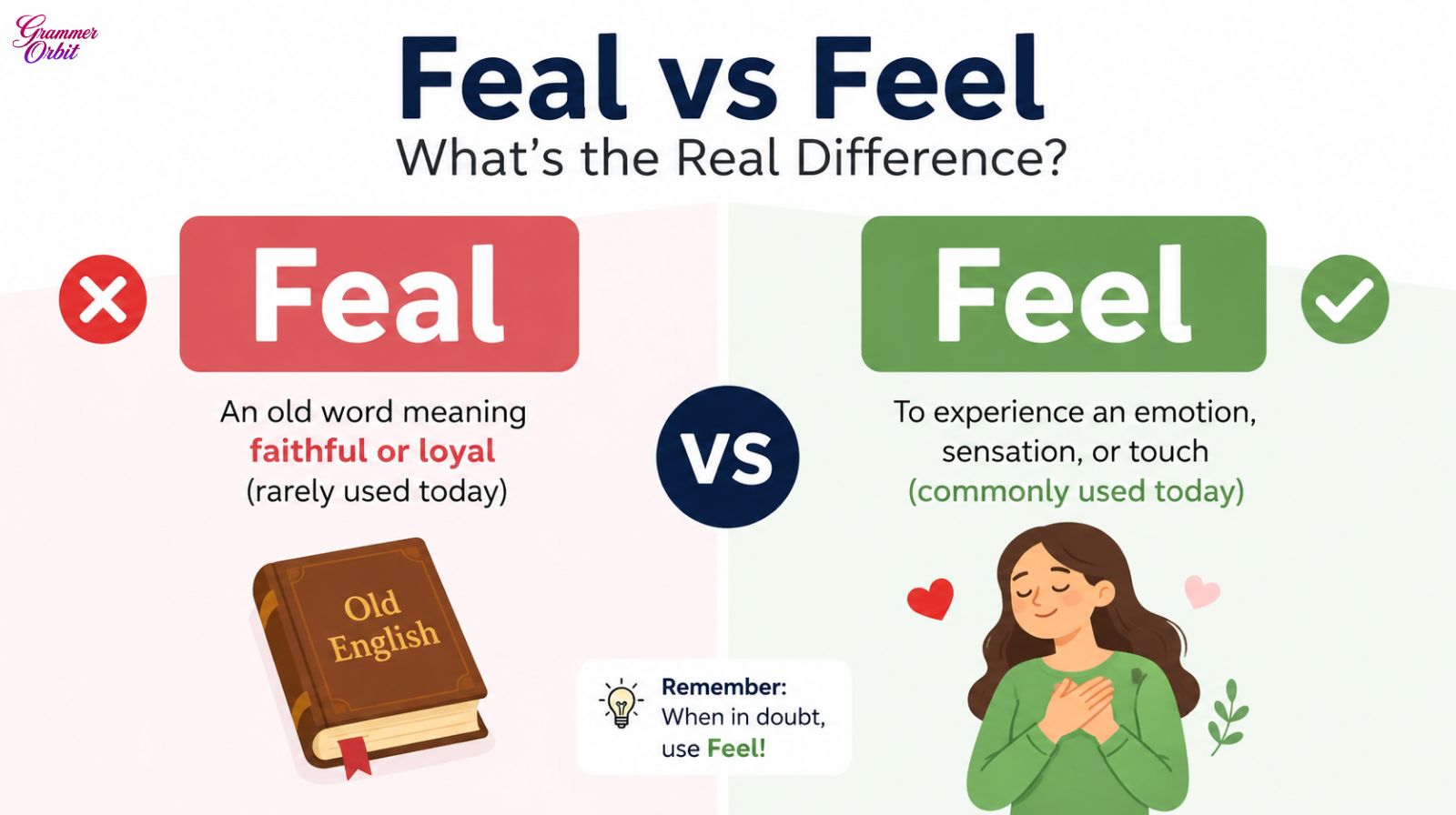
Have you ever typed “feal” instead of “feel” and wondered whether both words are correct? You’re not alone. Spelling mistakes happen to everyone, especially with words that sound similar when spoken quickly.
The confusion between Feal vs Feel is common because both words look alike, but they have very different meanings and usage. In modern English, feel is the correct word in almost every everyday situation, while feal is an extremely rare and outdated word that most English speakers never use.
In this guide, you’ll learn the difference between feal and feel, see practical examples, discover common mistakes, and know exactly which word to use in your writing.
Feal vs Feel: The Quick Answer
If you’re looking for the short answer, here it is:
| Word | Correct Today? | Meaning |
|---|---|---|
| Feel | ✅ Yes | To experience an emotion, sensation, or touch |
| Feal | ⚠️ Rare/Obsolete | Faithful, loyal (archaic usage) |
Bottom line: In modern English, feel is almost always the correct choice.
See also Unorganized vs Disorganized: Understanding The Key Differences
What Does “Feel” Mean?
The word feel is one of the most commonly used verbs in English. It refers to experiencing emotions, physical sensations, opinions, or touching something.
Feel as an Emotion
Examples:
- I feel happy today.
- She feels nervous before exams.
- We felt excited about the trip.
Feel as Physical Sensation
Examples:
- I can feel the cold wind.
- My hands feel warm.
- The blanket feels soft.
Feel as an Opinion
Examples:
- I feel this is the right decision.
- They feel the project needs more time.
What Does “Feal” Mean?
Unlike feel, the word feal is rarely seen in modern English.
Historically, feal was an adjective meaning:
- faithful
- loyal
- trustworthy
It appeared mainly in medieval English literature and historical writings.
Example (Historical)
- The knight remained feal to his king.
Today, almost nobody uses this word in everyday conversation or professional writing.
If you use feal instead of feel, most readers will assume it’s simply a spelling mistake.
Feal vs Feel: Key Differences
| Feature | Feal | Feel |
|---|---|---|
| Modern English | Rare | Very common |
| Part of Speech | Adjective | Verb (sometimes noun) |
| Meaning | Loyal, faithful | Experience emotion or sensation |
| Everyday Writing | No | Yes |
| Dictionaries | Historical usage | Standard English |
Common Examples of “Feel”
Talking About Emotions
- I feel confident.
- She feels disappointed.
- They feel proud.
Talking About Physical Touch
- I can feel the rain.
- He felt the vibration.
- The water feels cold.
Talking About Opinions
- I feel we should leave now.
- She feels this is unfair.
Common Mistakes People Make
Many writers accidentally type feal because:
Fast Typing
The letters “a” and “e” are close enough that typing errors happen easily.
Autocorrect Issues
Sometimes autocorrect fails to catch unusual spelling mistakes.
Pronunciation Confusion
Both words appear similar visually, causing people to question the correct spelling.
Fortunately, the solution is simple:
Whenever you’re talking about emotions, touch, opinions, or sensations, use feel.
See also Maintained vs Maintenanced: What’s The Difference?
Real-Life Example: Why One Letter Matters
Imagine Sarah is applying for her dream marketing job. Before submitting her cover letter, she writes:
“I feal excited about joining your company.”
Although the hiring manager immediately understands her meaning, the spelling mistake leaves a poor first impression. In competitive hiring, even small errors can suggest a lack of attention to detail.
Sarah later reviews her application with a grammar checker and corrects the sentence to:
“I feel excited about joining your company.”
The corrected version reads naturally and professionally. This small change demonstrates care, accuracy, and confidence in written communication.
The lesson applies beyond job applications. Whether you’re sending emails, writing blog posts, posting on social media, or completing school assignments, using feel instead of the accidental misspelling feal helps your writing appear polished and trustworthy. One correctly spelled word can improve your credibility more than many people realize.
Why Do People Confuse Feal and Feel?
Several factors contribute to this common mistake:
Similar Letter Pattern
Both words differ by only one letter.
Muscle Memory
Frequent typing can cause accidental keystrokes.
Lack of Familiarity
Most people have never encountered the historical word feal, making them wonder whether it’s an accepted alternative.
See also Realist vs Realest: How Are These Different? When To Use Each Word
Statistics: Why Correct Spelling Matters (2025–2026)
Recent writing and digital communication research continues to show that spelling accuracy affects credibility and readability.
- Studies consistently find that spelling mistakes reduce readers’ trust in professional writing.
- AI-powered grammar tools and spell checkers are now widely used in workplaces, schools, and publishing to catch errors before publication.
- Search engines prioritize high-quality, well-written content that demonstrates expertise and trustworthiness.
- Clear, error-free writing also improves user engagement, reduces confusion, and supports better accessibility for readers.
For this reason, choosing feel instead of the mistaken feal helps your writing appear more polished and professional.
FAQs
Q1: Is “feal” a real English word?
A: Yes. It is an old English word meaning faithful or loyal, but it is considered obsolete in modern writing.
Q2: Is “feel” the correct spelling?
A: Yes. Feel is the standard modern English spelling.
Q3: Can I use “feal” in everyday writing?
A: No. Unless you’re quoting historical literature, you should use feel.
Q4: Why do people type “feal”?
A: Usually because of a typing error or uncertainty about spelling.
Q5: Is “feal” accepted in dictionaries?
A: Some dictionaries list it as an archaic or obsolete word.
Q6: Which spelling should students use?
A: Students should almost always use feel.
Q7: Is “feal” wrong?
A: For modern English writing, yes. It’s usually considered a spelling mistake unless discussing historical language.
Conclusion
Although Feal vs Feel may seem confusing at first glance, the answer is actually straightforward. Feel is the correct word for expressing emotions, sensations, opinions, and physical touch. Feal, on the other hand, is an obsolete word meaning faithful or loyal and is almost never used in modern English.
Whenever you’re writing emails, essays, blog posts, or social media content, choose feel to ensure your writing is clear, accurate, and professional. If you’re ever unsure, remember this simple rule:
If you’re talking about emotions or sensations, the correct word is always “feel.”
👉 Discover more simple and practical grammar guides on Grammer Orbit

Zia Ahmad is a professional blogger specializing in grammar tips and spelling accuracy. He creates clear, practical content that helps readers eliminate errors, strengthen writing skills, and communicate effectively for students, professionals, and everyday writers worldwide.