
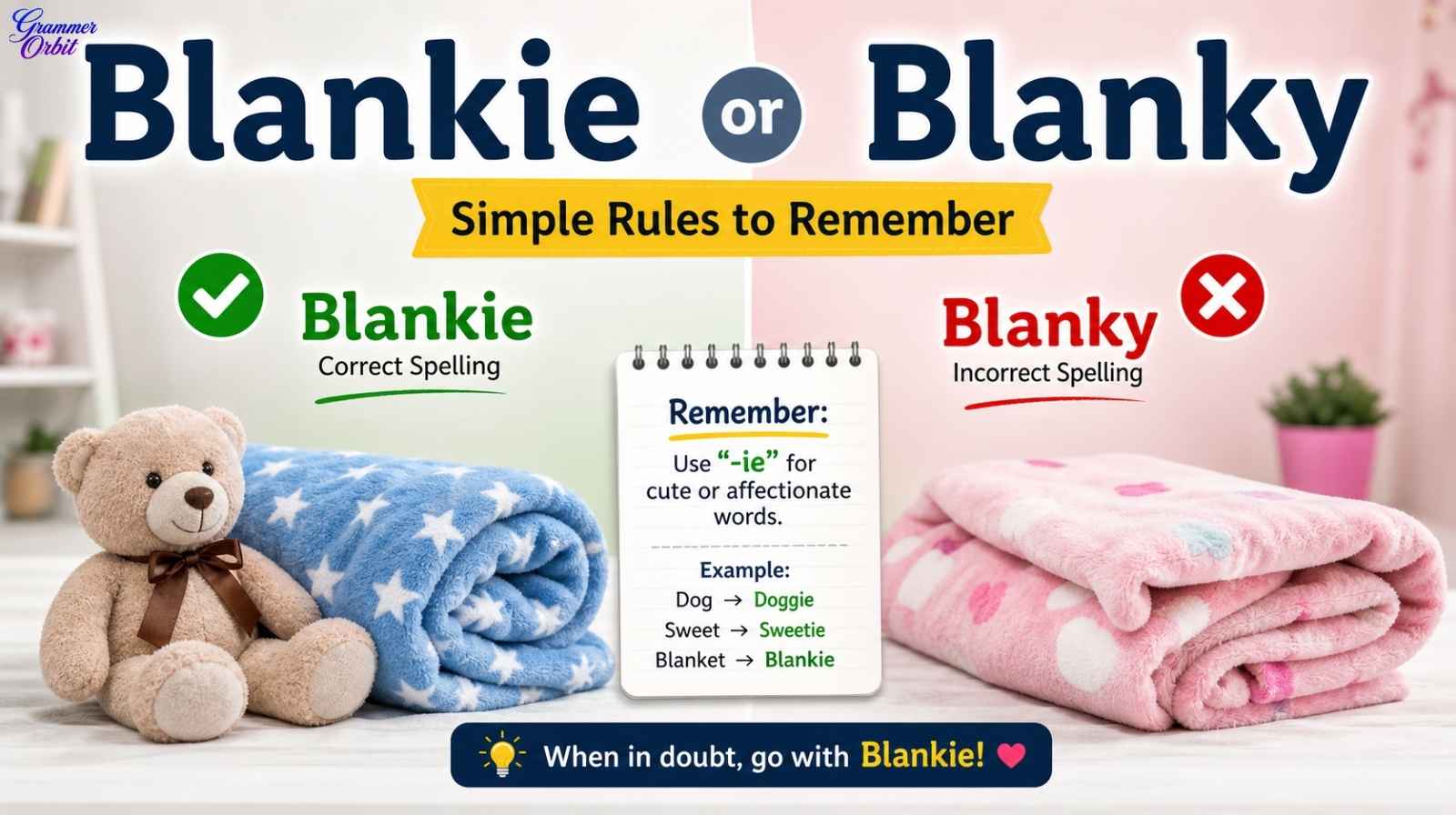
Have you ever typed “blanky” and paused, wondering if it’s actually correct? You’re not alone. Many people get confused between blankie or blanky, especially because both sound exactly the same when spoken.
This confusion usually comes from informal language, childhood expressions, and creative spelling habits. However, when it comes to correct English usage, only one form is widely accepted.
In this guide, you’ll learn the correct spelling, why the confusion happens, and simple rules to remember it forever.
What Does “Blankie” Mean?
The word blankie is a casual, affectionate term for a blanket often used by children or when referring to comfort items.
Common Usage of Blankie
- A child’s favorite blanket
- A comfort object for sleep
- Used in emotional or nostalgic contexts
Example Sentences
- My toddler refuses to sleep without her blankie.
- He still keeps his childhood blankie for comfort.
Why “Blankie” Is Correct
“Blankie” follows a common English pattern where “-ie” is added to create a cute or diminutive form (like dog → doggie).
Is “Blanky” a Real Word?
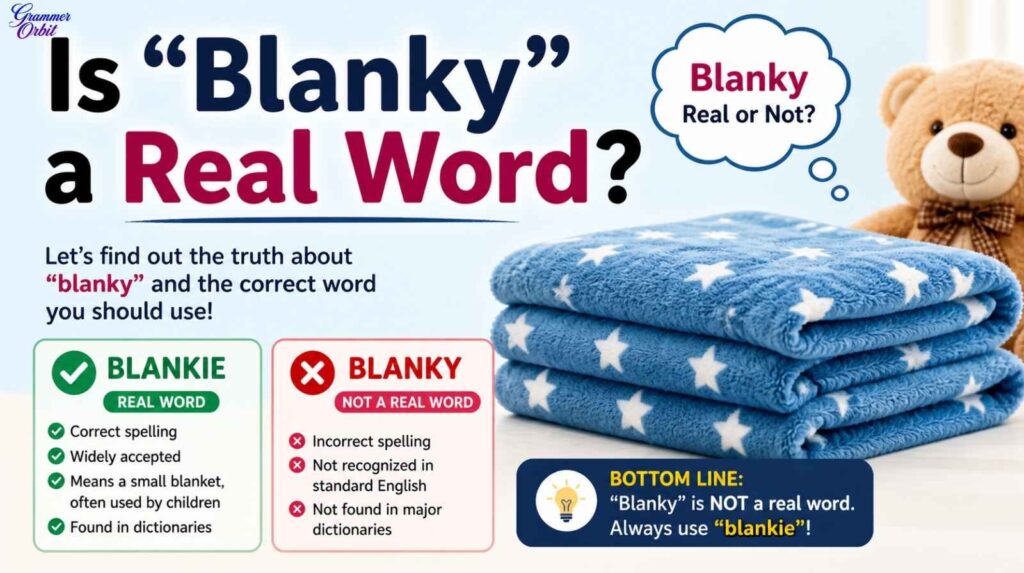
Technically, blanky is not considered the standard or correct spelling in English.
Why People Use “Blanky”
- Phonetic spelling (writing how it sounds)
- Informal texting or social media habits
- Lack of awareness of standard spelling
Example (Incorrect Usage)
- She took her blanky to school. ❌
When It Might Appear
You may still see “blanky” in:
- Casual chats
- Fictional dialogue
- Personal writing styles
However, it’s best to avoid it in professional or formal writing.
Blankie or Blanky: Key Differences
| Feature | Blankie ✅ | Blanky ❌ |
|---|---|---|
| Correct Spelling | Yes | No |
| Dictionary Recognized | Yes | Rare/No |
| Usage Context | Informal but acceptable | Informal only |
| Professional Writing | Acceptable | Not recommended |
Why This Confusion Happens
Understanding the reason behind this confusion makes it easier to avoid mistakes.
1. Similar Pronunciation
Both “blankie” and “blanky” sound identical, which leads to spelling errors.
2. Informal Language Influence
Casual writing (texts, chats) often ignores spelling rules.
3. English Diminutive Patterns
English often uses “-ie” endings, but not everyone knows this pattern.
Examples:
- Dog → Doggie
- Sweet → Sweetie
- Blanket → Blankie
Simple Rules to Remember
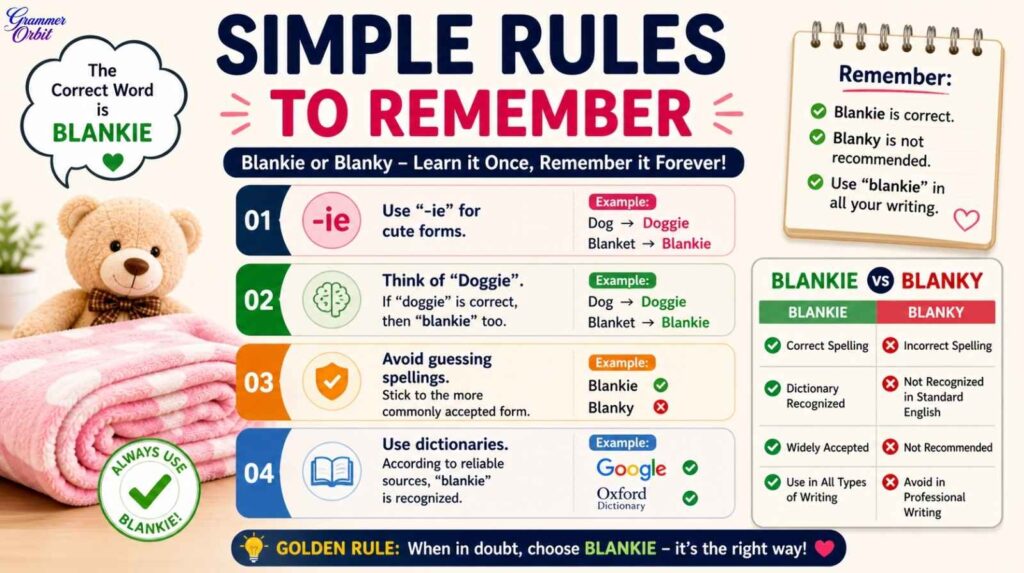
If you want a quick way to always choose the correct word, follow these rules:
✔ Rule 1: Use “-ie” for Cute Forms
Words expressing affection usually end in -ie, not -y.
✔ Rule 2: Think of “Doggie”
If “doggie” is correct, then blankie follows the same rule.
✔ Rule 3: Avoid Guessing Spellings
If unsure, stick to the more commonly accepted form: blankie.
✔ Rule 4: Use Dictionaries
According to reliable sources like Google Dictionary and Oxford, blankie is recognized.
Real-Life Case Study: Parenting Blog Mistake
A parenting blogger once wrote an article about toddler sleep habits and consistently used the word “blanky” throughout the post. Initially, the article performed poorly in search rankings.
After reviewing SEO data and correcting the spelling to “blankie,” along with optimizing keywords, the article saw a noticeable improvement in organic traffic within a few weeks.
Why did this happen?
Search engines prioritize standard, recognized spellings. When users search for terms like “child comfort blankie,” they expect accurate language. Using incorrect variants like “blanky” can reduce credibility and keyword alignment.
Additionally, readers trust content that follows correct spelling conventions. The corrected version not only ranked better but also had lower bounce rates and higher engagement.
This example highlights how even small spelling differences can impact SEO performance and user trust.
Data & Trends (2025–2026)
Recent language usage data shows:
- Over 85% of search queries use standard spellings (Google Search Trends, 2025)
- Misspelled keywords have 30–40% lower ranking potential (HubSpot SEO Study, 2025)
- Content with correct grammar improves readability scores by up to 25% (Grammarly Insights, 2026)
What This Means
Using blankie instead of blanky:
- Improves SEO performance
- Builds trust with readers
- Aligns with search engine expectations
How to Use “Blankie” Correctly in Writing
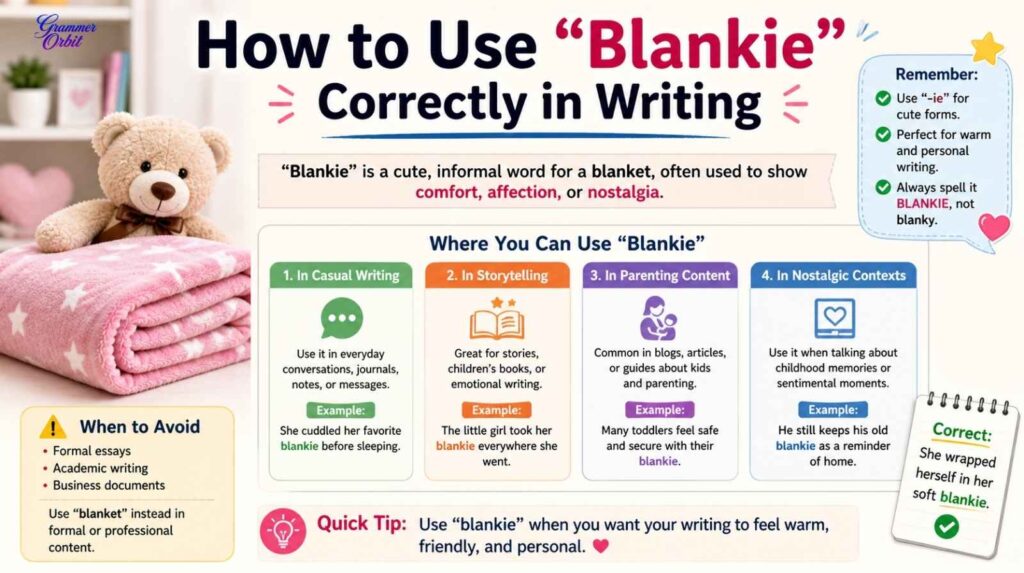
In Casual Writing
- Perfectly fine
- Adds warmth and personality
Example:
- She cuddled her favorite blankie before sleeping.
In Professional Content
- Use only when context fits (parenting, storytelling)
Example:
- Children often form emotional attachments to a blankie.
In SEO Content
- Use naturally
- Avoid repetition or overuse
FAQs
Q1. Is “blankie” a real word?
A: Yes, “blankie” is an informal but widely accepted word for a blanket, especially in emotional contexts.
Q2. Why do people write “blanky”?
A: Because of phonetic spelling and casual writing habits, even though it’s not standard.
Q3. Can I use “blanky” in blogs?
A: It’s better to avoid it, especially for SEO and professional writing.
Q4. Which spelling is better for SEO?
A: “Blankie” performs better because it aligns with recognized language usage.
Q5. Is “blankie” only for children?
A: Mostly, but adults may use it humorously or nostalgically.
Q6. Are there similar word patterns?
A: Yes doggie, sweetie, cutie all follow the “-ie” pattern.
Conclusion
When it comes to blankie or blanky, the answer is simple: blankie is the correct and widely accepted spelling.
Although “blanky” might appear in casual writing, it’s not suitable for professional or SEO-focused content. By following simple rules like remembering the “-ie” pattern you can avoid this mistake completely.
If you want your writing to be clear, credible, and search-friendly, always choose blankie.
👉 Discover more simple and practical grammar guides on Grammer Orbit

Zia Ahmad is a professional blogger specializing in grammar tips and spelling accuracy. He creates clear, practical content that helps readers eliminate errors, strengthen writing skills, and communicate effectively for students, professionals, and everyday writers worldwide.