
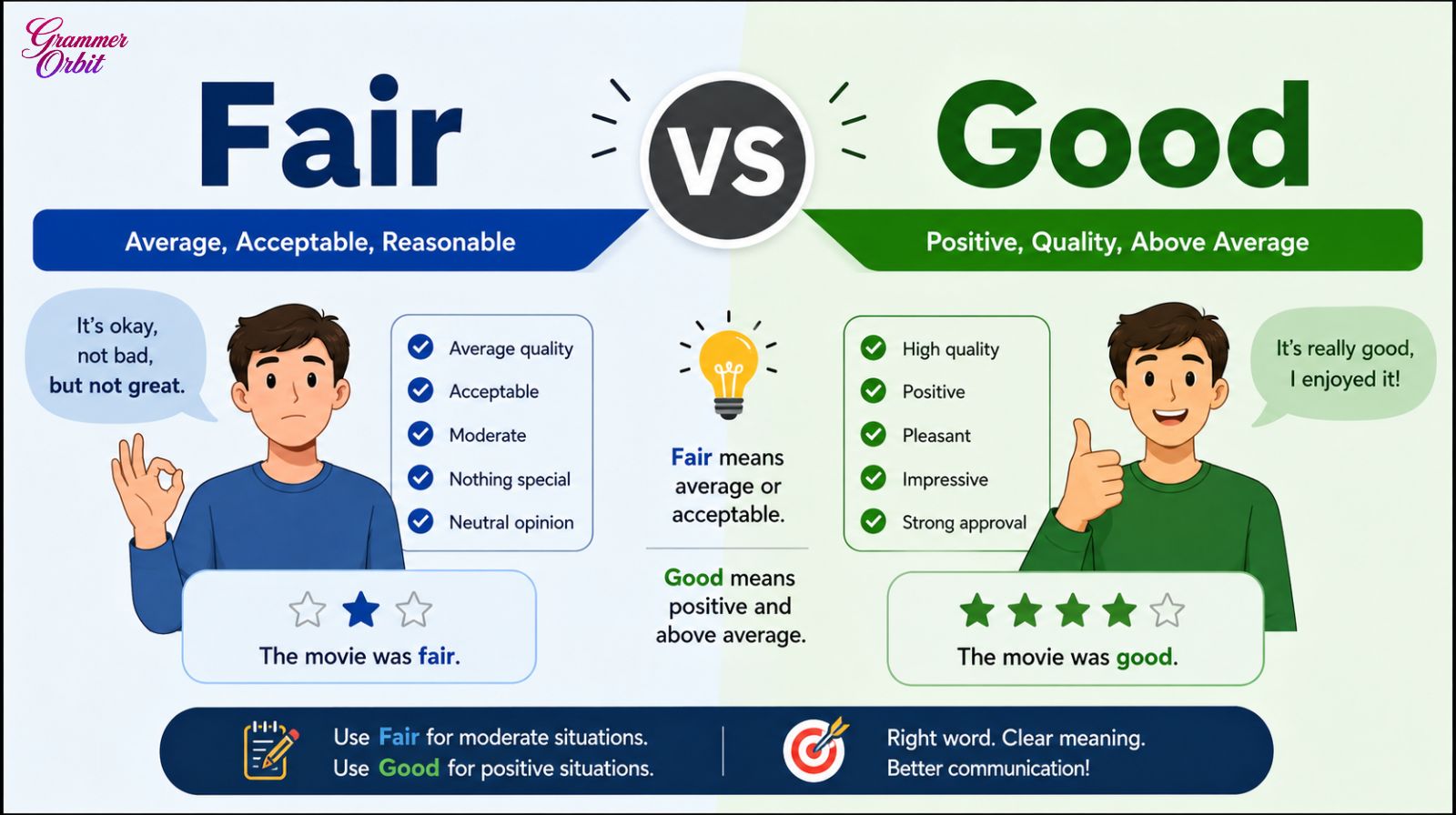
Have you ever heard someone say, “That movie was fair,” while another person called it “good,” and wondered what the actual difference was? You are not alone. Many English learners and even native speakers sometimes confuse fair vs good because both words are often used to describe quality, performance, or opinions.
However, these two words do not mean the same thing. Using the wrong one can completely change the tone of your sentence. For example, calling someone’s work “fair” may sound average or disappointing, while “good” sounds positive and approving.
In this guide, you will learn the exact difference between fair and good, when to use each word, common mistakes people make, and real-life examples that make the meanings easy to understand. By the end of this article, you will feel confident using both words naturally in conversations, writing, schoolwork, and professional communication.
What Does “Fair” Mean?
The word “fair” has several meanings in English, but the most common meaning refers to something that is average, acceptable, or reasonable rather than excellent.
In some situations, fair can also mean just, honest, or equal.
Fair as Average Quality
When people use fair to describe quality, they usually mean something is “okay” but not impressive.
Examples
- The restaurant food was fair, but not amazing.
- Her exam results were fair compared to the rest of the class.
- The weather was fair during the trip.
See also Clutz or Klutz: Which Spelling Is Correct in English?
In these examples, fair suggests moderate quality.
Fair as Honest or Equal
Another meaning of fair is treating people equally or honestly.
Examples
- A fair judge listens to both sides carefully.
- Teachers should give students fair grades.
- Everyone deserves fair treatment at work.
Here, fair has nothing to do with quality. Instead, it relates to justice and equality.
Common Synonyms of Fair
Some words similar to fair include:
- Average
- Reasonable
- Moderate
- Acceptable
- Honest
- Impartial
However, the exact meaning depends on context.
What Does “Good” Mean?
The word “good” is much more positive. It describes something pleasing, satisfying, beneficial, or high in quality.
When people hear “good,” they usually think of approval.
Good as High Quality
This is the most common usage.
Examples
- She is a good writer.
- That was a really good movie.
- We had a good experience at the hotel.
In these examples, good clearly expresses a positive opinion.
Good as Beneficial or Kind
Good can also describe morality, kindness, or usefulness.
Examples
- He is a good person.
- Drinking water is good for health.
- Good habits improve productivity.
Common Synonyms of Good
Words similar to good include:
- Excellent
- Nice
- Positive
- Helpful
- Pleasant
- Valuable
Unlike fair, good almost always carries a positive tone.
Fair vs Good: The Main Difference
The biggest difference between fair and good is the level of quality or positivity they express.
| Word | Meaning | Tone | Quality Level |
|---|---|---|---|
| Fair | Average or acceptable | Neutral | Medium |
| Good | Positive or satisfying | Positive | Above average |
Simple Explanation
- Fair = not bad, but not impressive
- Good = clearly positive and satisfying
Example Comparison
Fair
“The presentation was fair.”
This means the presentation was acceptable but could have been better.
Good
“The presentation was good.”
This means the presentation was successful and enjoyable.
That small word choice changes the entire meaning.
When Should You Use “Fair”?
You should use fair when talking about something average, moderate, or reasonably acceptable.
Use Fair for Neutral Opinions
Fair is useful when you do not want to sound too positive or too negative.
Examples
- The customer service was fair.
- His performance this season has been fair.
- The condition of the car is fair.
Use Fair in Formal Evaluations
Schools, workplaces, and organizations sometimes use fair in reports or grading systems.
Examples
- Fair condition
- Fair performance
- Fair rating
In professional settings, fair often means “below good but acceptable.”
Use Fair When Discussing Justice
This is another important usage.
Examples
- The company created a fair policy.
- Judges must remain fair.
When Should You Use “Good”?
Use good when you want to express approval, satisfaction, or strong quality.
Use Good for Positive Feedback
Examples
- She did a good job.
- This laptop has good battery life.
- The food tastes good.
Use Good in Everyday Conversation
See also Until or Untill: The Complete Grammar Guide
Good is one of the most commonly used words in English.
Examples
- Good morning
- Good idea
- Good luck
- Good news
Use Good to Build Positive Tone
In professional communication, good sounds encouraging and supportive.
Example
Instead of saying:
“Your work is fair.”
You might say:
“Your work is good.”
The second sentence sounds more motivating.
Real-Life Case Study: How Word Choice Changed Customer Feedback
A small online clothing business in 2025 learned how important word choice can be in customer communication. The company regularly sent product review surveys to customers after purchases.
Initially, they used phrases like:
- “How fair was the product quality?”
- “Was the delivery experience fair?”
Although the company believed “fair” sounded professional, many customers interpreted it negatively. Several buyers assumed the company expected average ratings instead of honest feedback.
As a result, customer satisfaction scores remained lower than expected. According to internal testing, users associated fair with “barely acceptable” rather than positive quality.
The marketing team later changed the wording to:
- “How good was the product quality?”
- “Did you have a good delivery experience?”
Within three months, customer engagement increased significantly. More customers completed surveys, and feedback became more positive and detailed.
This example shows how fair and good create different emotional reactions, even when discussing similar topics. Good encourages positivity, while fair often feels neutral or slightly weak.
Businesses, teachers, and professionals now pay closer attention to these subtle language differences because wording affects trust, clarity, and communication quality.
Fair vs Good in Grammar and Writing
Many English learners struggle to choose between these words while writing essays, emails, or reviews.
“Fair” Sounds More Reserved
Writers often use fair when they want to avoid sounding overly enthusiastic.
Example
- The performance was fair overall.
This sounds cautious and balanced.
“Good” Sounds More Positive
Good creates stronger approval.
Example
- The performance was good overall.
This sounds encouraging and confident.
Which Word Sounds Better?
That depends on your intention.
| Situation | Better Word |
|---|---|
| Average performance | Fair |
| Positive review | Good |
| Honest treatment | Fair |
| Complimenting someone | Good |
| Moderate condition | Fair |
| High quality result | Good |
Common Mistakes People Make With Fair vs Good
Understanding common mistakes can help you avoid awkward sentences.
Mistake 1: Using Fair as a Compliment
Some learners think fair means positive.
Incorrect Expectation
“Your work is fair.”
This may sound disappointing instead of encouraging.
Better Alternative
“Your work is good.”
Mistake 2: Using Good for Justice
Good cannot replace fair when discussing equality or honesty.
Incorrect
“The judge was good to both sides.”
Better
“The judge was fair to both sides.”
Mistake 3: Confusing Formal Ratings
In product descriptions or inspections:
- Fair condition = acceptable but worn
- Good condition = better maintained
This difference matters in buying and selling.
Data and Language Trends in 2025–2026
According to recent language usage data from sources like Google Trends and Merriam-Webster, searches related to confusing English word comparisons increased significantly during 2025.
Searches for phrases like:
- “fair vs good”
- “difference between fair and good”
- “fair meaning in English”
have grown because more people are learning English online through digital platforms, remote education, and international work environments.
Additionally, workplace communication studies shared by HubSpot show that positive wording improves customer trust and engagement. This explains why businesses often prefer using good instead of fair in reviews and marketing language.
These trends highlight how small vocabulary choices influence communication in both personal and professional settings.
Fair vs Good: Quick Comparison Checklist
Here is a simple checklist to remember the difference easily.
Use “Fair” When:
- Something is average
- Quality is acceptable but not impressive
- Discussing justice or equality
- Giving neutral feedback
- Describing moderate condition
Use “Good” When:
- Something is positive
- Quality is above average
- Complimenting people
- Expressing satisfaction
- Encouraging others
FAQs
Q1: Is fair better than good?
A: No. Good is usually considered better than fair because fair often means average or acceptable.
Q2: Does fair mean bad?
A: Not exactly. Fair usually means moderate or acceptable, not terrible.
Q3: Can fair and good be synonyms?
A: Sometimes they are close in meaning, but good is more positive while fair is more neutral.
Q4: Why does “fair” sound less positive?
A: Because people often associate fair with average quality rather than excellence.
Q5: Is “good condition” better than “fair condition”?
A: Yes. In ratings and product descriptions, good condition is better than fair condition.
Q6: Can fair mean honest?
A: Yes. Fair can describe equal, honest, or impartial treatment.
Q7: Which word should I use in reviews?
A: Use good for positive experiences and fair for average experiences.
Conclusion
Understanding the difference between fair vs good is important because these words create very different impressions. Fair usually means average, acceptable, or impartial, while good expresses clear positivity and approval.
If you want to describe something neutral or moderate, fair is often the right choice. However, if you want to praise quality, encourage someone, or share a positive opinion, good works much better.
Small word choices can change how people understand your message. Therefore, learning these differences helps improve your English communication, writing skills, and confidence in everyday conversations.
The next time you describe a movie, performance, product, or person, you will know exactly whether fair or good fits best.
👉 Discover more simple and practical grammar guides on Grammer Orbit

Zia Ahmad is a professional blogger specializing in grammar tips and spelling accuracy. He creates clear, practical content that helps readers eliminate errors, strengthen writing skills, and communicate effectively for students, professionals, and everyday writers worldwide.