
Have you ever typed “Natzi” and paused, wondering if it’s actually correct or just a simple mistake? You’re not alone. Many writers get confused between Natzi vs Nazi, especially since they look and sound similar at a glance.
However, this isn’t just a minor spelling issue. The difference between these two words carries historical, cultural, and ethical significance. Using the wrong term can affect your credibility and, in some cases, even offend readers.
In this guide, you’ll learn the correct spelling, meaning, usage, and why it truly matters so you can write with confidence, clarity, and accuracy.
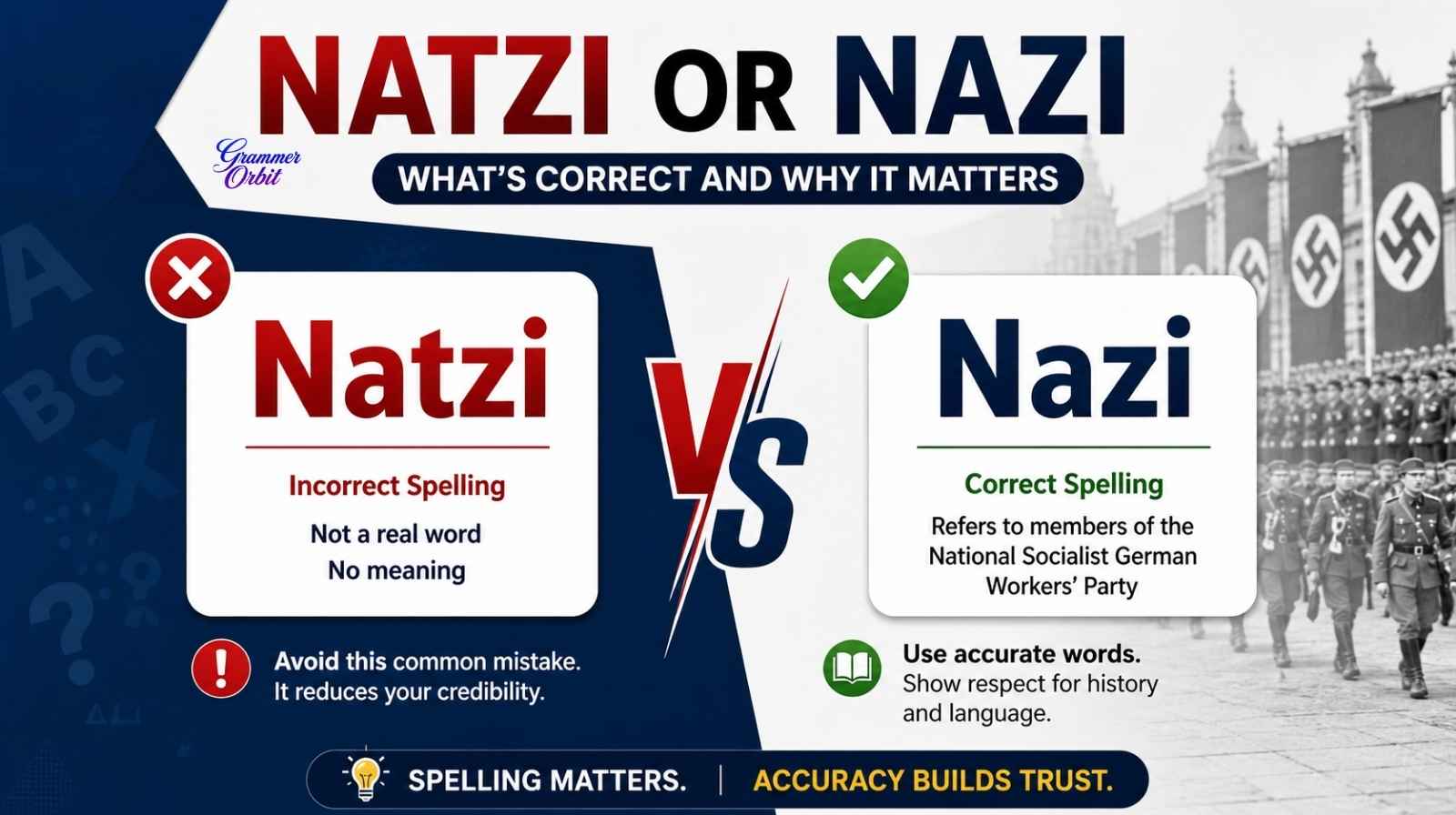
What Is the Correct Spelling: Natzi or Nazi?
The correct spelling is Nazi.
“Natzi” is simply a misspelling and has no recognized meaning in standard English dictionaries.
Why “Nazi” Is Correct
The word “Nazi” comes from the German term:
Nationalsozialist (National Socialist)
It refers to members of the political movement led by Adolf Hitler in Germany during the 20th century.
Why “Natzi” Is Incorrect
- It is not listed in major dictionaries
- It has no historical or linguistic basis
- It is usually a typing or phonetic error
Quick Tip
If you’re unsure, remember:
“Nazi” = real word
“Natzi” = mistake
Why Do People Confuse Natzi vs Nazi?
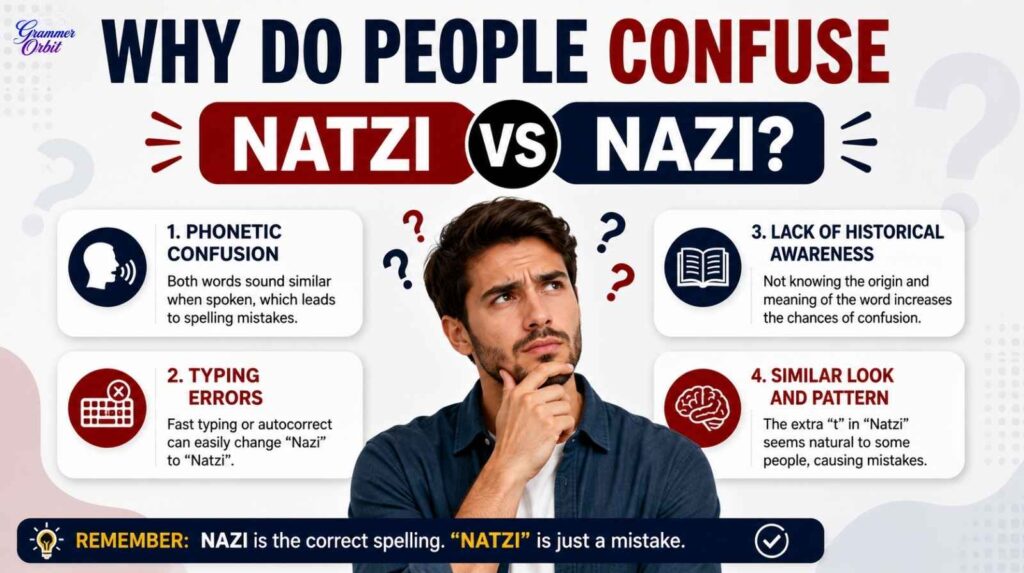
Spelling confusion happens more often than you might think, and there are clear reasons behind it.
1. Phonetic Confusion
Both words sound similar when spoken casually. This leads people to assume “Natzi” might be correct.
2. Typing Errors
Fast typing or autocorrect issues can easily turn “Nazi” into “Natzi.”
3. Lack of Historical Awareness
Some writers may not fully understand the historical origin of the term, which increases the chance of errors.
Meaning and Historical Context of “Nazi”
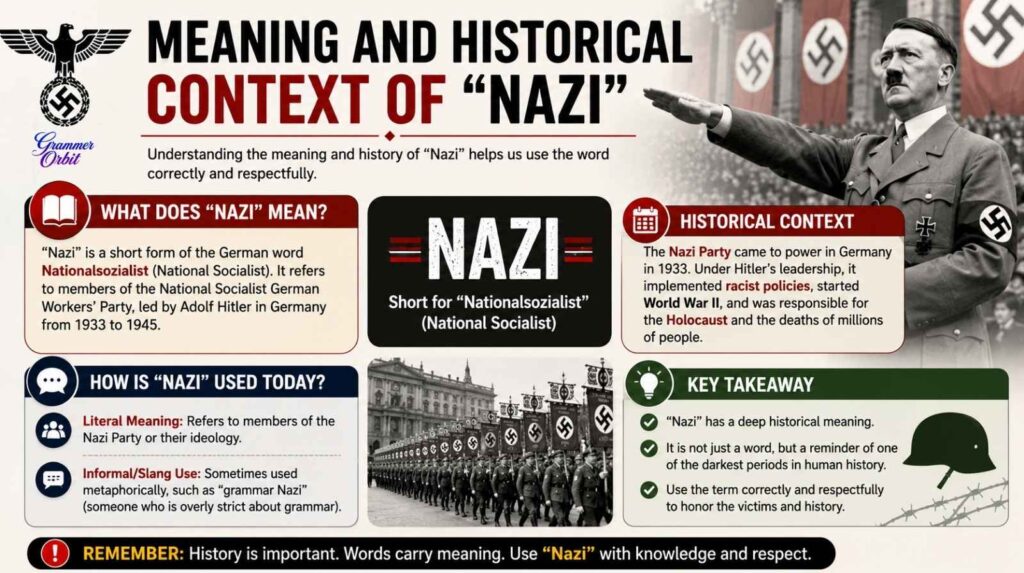
Understanding the meaning helps reinforce why correct spelling matters.
Historical Definition
A “Nazi” refers to a member of the National Socialist German Workers’ Party, active during the rule of Adolf Hitler (1933–1945).
Modern Usage
Today, the term can be used in two ways:
Literal Meaning
Refers to historical members of the Nazi Party.
Informal/Slang Use
Used metaphorically (e.g., “grammar Nazi”), though this usage can be controversial and should be used carefully.
Natzi vs Nazi: Comparison Table
| Feature | Nazi | Natzi |
|---|---|---|
| Correct Word | ✅ Yes | ❌ No |
| Meaning | Historical/political term | No meaning |
| Dictionary | Included | Not included |
| Usage | Formal & informal contexts | Incorrect usage |
| Credibility | Builds trust | Reduces credibility |
Real-Life Example: Why Correct Spelling Matters
A content writer once published a blog post discussing World War II history. Throughout the article, they repeatedly used the word “Natzi” instead of “Nazi.”
At first, the mistake seemed minor. However, readers quickly noticed and pointed it out in the comments. Some even questioned the writer’s credibility and research quality.
As a result:
- The article lost trust among readers
- Engagement dropped significantly
- The site had to revise and republish the content
This example shows that even a small spelling error especially with historically sensitive terms can have serious consequences.
Accuracy isn’t just about grammar; it’s about respect, authority, and professionalism.
Data & Statistics: Why Spelling Accuracy Matters (2025–2026)
Recent studies highlight the importance of correct spelling in content:
- According to a 2025 report by Google Search Central, content accuracy is a key factor in ranking and trust signals
- A 2024 survey by HubSpot found that 74% of readers lose trust in content with spelling errors
- Research shows that pages with fewer errors have higher engagement and lower bounce rates
These insights confirm that even a single mistake like using “Natzi”can negatively impact SEO performance and user trust.
How to Avoid Spelling Mistakes Like “Natzi”
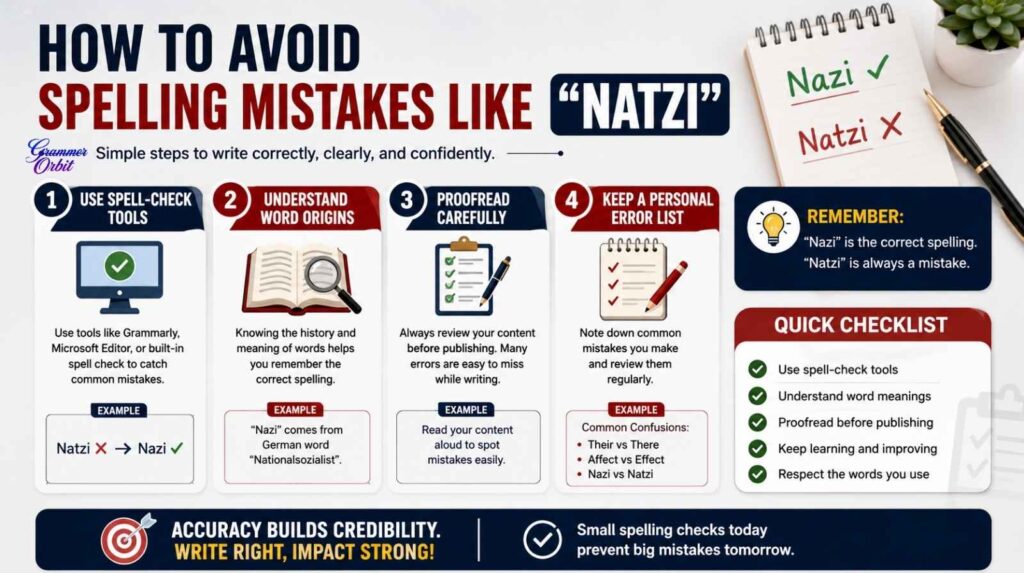
Improving your writing accuracy doesn’t have to be difficult.
1. Use Spell-Check Tools
Tools like Grammarly or built-in editors can catch obvious mistakes.
2. Understand Word Origins
Knowing the background of words helps you remember correct spelling.
3. Proofread Carefully
Always review your content before publishing.
4. Keep a Personal Error List
Track commonly confused words like:
- Their vs There
- Affect vs Effect
- Nazi vs Natzi
FAQs
Q1. Is “Natzi” ever a correct word?
A: No, “Natzi” is not a valid English word. It is always considered a spelling mistake.
Q2. What does “Nazi” mean?
A: It refers to a member of the National Socialist Party in Germany during Hitler’s rule.
Q3. Why is spelling “Nazi” correctly important?
A: Because it carries historical significance and incorrect usage can harm credibility.
Q4. Can “Nazi” be used in informal contexts?
A: Yes, but cautiously. Informal usage (like “grammar Nazi”) can sometimes be seen as insensitive.
Q5. How can I remember the correct spelling?
A: Focus on the original German term and remember that “Nazi” is the widely accepted spelling.
Conclusion
When it comes to Natzi vs Nazi, the answer is clear: “Nazi” is the only correct spelling.
While “Natzi” may seem like a small mistake, it can have a big impact on credibility, clarity, and professionalism. In today’s content-driven world, accuracy matters more than ever.
By understanding the correct usage, proofreading your work, and paying attention to detail, you can avoid common mistakes and build stronger, more trustworthy writing.
👉 Discover more simple and practical grammar guides on Grammer Orbit

Zia Ahmad is a professional blogger specializing in grammar tips and spelling accuracy. He creates clear, practical content that helps readers eliminate errors, strengthen writing skills, and communicate effectively for students, professionals, and everyday writers worldwide.